


Clara Barciela
Hi, I’m Clara. I wrote this to help you plan your trip more authentically, with more clarity and less overwhelm.
If you’re planning Patagonia, you probably started with the places you want to see.
Torres del Paine. Maybe El Calafate and Perito Moreno Glacier. Maybe Ushuaia.
Then you look at the map.
And you realize the difficult part isn’t necessarily deciding where you want to go in Argentine and Chilean Patagonia.
It’s figuring out how to connect it all without spending too much of your Patagonia trip simply getting from one place to the next.
Patagonia is enormous. And when you’re trying to combine Argentina and Chile, those distances can quickly turn into flights, border crossings and long transfers.
But there’s another possibility we often consider when Ushuaia and southern Chile are both part of the journey.
At the southern end of the continent, where the roads eventually stop, you can continue through Patagonia by sea.
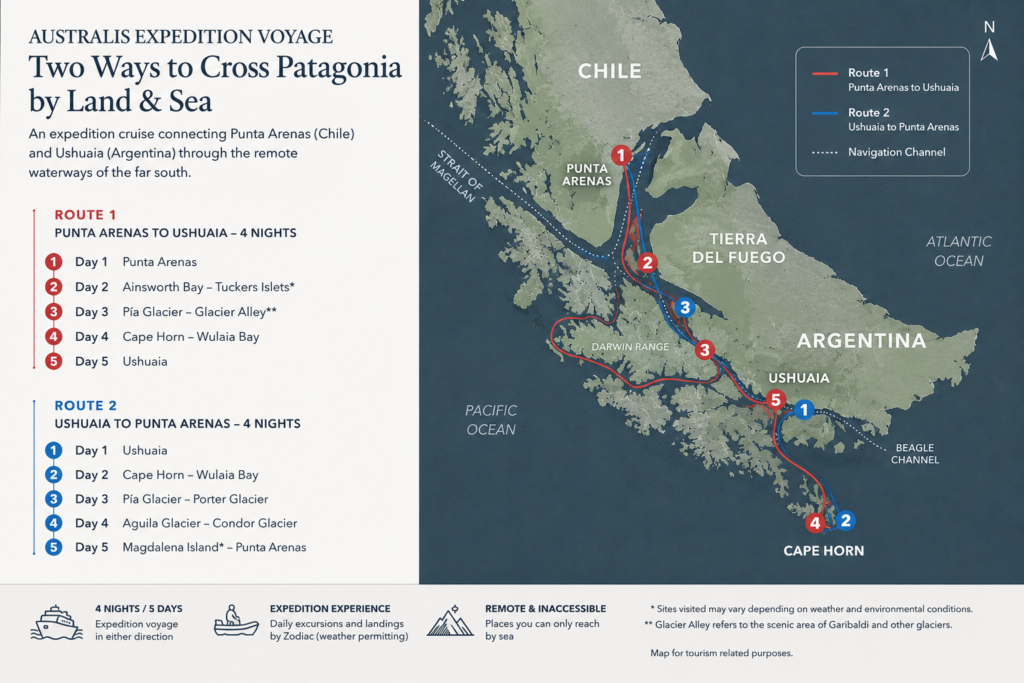
Australis connects Ushuaia, in Argentina, with Punta Arenas, in Chile, on a four-night expedition voyage through the waterways at the southern tip of South America. Along the way, the journey takes you through places that, aren’t accessible by car or plane.
And that’s what makes this route interesting to us.
Instead of leaving one part of Patagonia simply to reach another, you keep experiencing Patagonia along the way.
But that doesn’t automatically mean it’s the right choice.
Four nights at sea are four nights you could spend somewhere else in Patagonia. So the real question isn’t simply whether you can connect Argentina and Chile this way.
It’s whether those four days make the whole journey better.
The Short Answer
What is the best way to combine Argentine and Chilean Patagonia in one trip?
There isn’t one route that’s best for everyone. If your time is limited, a faster connection may make more sense. But if Ushuaia and southern Chile are both priorities, traveling between them by expedition ship allows the connection itself to become part of the Patagonia experience rather than simply another transfer.
In this guide, we’ll look at how that route works, what you experience along the way, who it’s right for, what you give up by dedicating four nights to it — and how we decide whether it deserves a place in a Patagonia itinerary.
Why Combining Argentina & Chilean Patagonia Is More Complicated Than It Looks
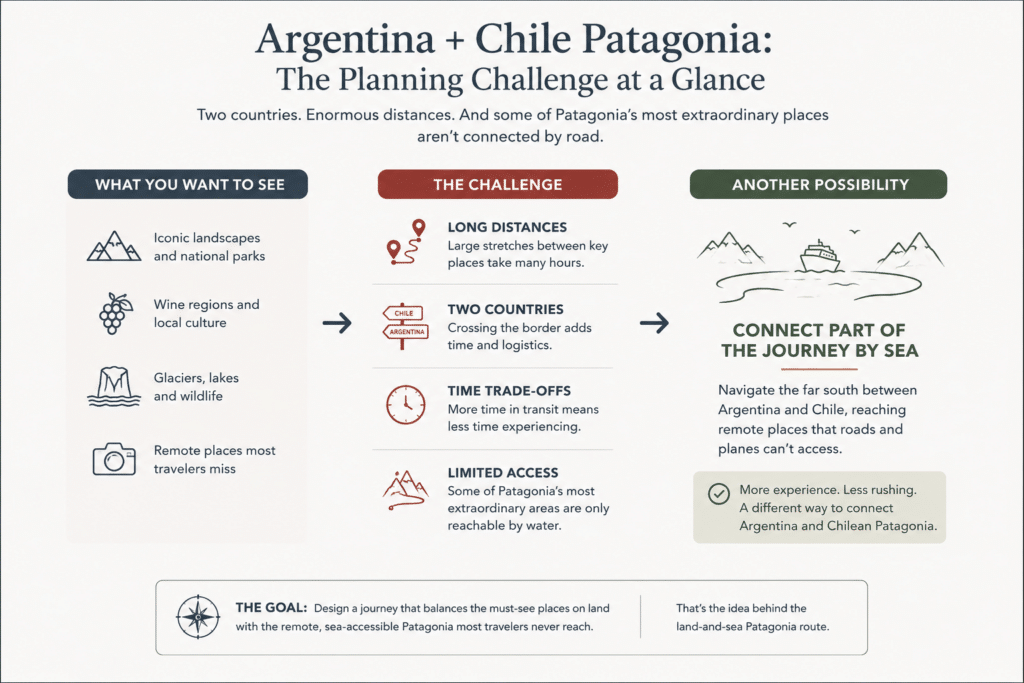
Patagonia gives you no shortage of places you might want to include in a trip.
Torres del Paine. El Calafate and Perito Moreno Glacier. Ushuaia. Maybe El Chaltén.
The challenge begins when you try to connect them.
Distances are enormous. Argentina and Chile mean international borders. And depending on the route you choose, moving through Patagonia can involve flights, buses, private transfers and long travel days.
So when we’re planning a journey that combines both sides of Patagonia, we’re not only looking at how many destinations can technically fit into the time available.
We’re looking at what happens to the journey when we fit them all in.
Because it’s entirely possible to create an itinerary that works perfectly on paper — and still spend more time than you expected packing, transferring, crossing borders and getting ready to move again.
That’s why one of the questions we come back to when designing Patagonia is:
The question isn’t, “Can we fit all of this in?” It’s, “Will it still feel like a journey once we do?”
Sometimes that means leaving a place out.
Sometimes it means staying longer.
And sometimes it means reconsidering the way you get from one place to the next.
Because at the southern end of Patagonia, there’s a connection many travelers don’t realize is possible

Before You Plan Patagonia
Start with the decisions that shape the whole journey.
Our South America planning guide walks you through the 7 decisions we use when helping travelers think about timing, pace, and which regions actually make sense together.
Get the Planning Guide →The Patagonia Connection Most Travelers Don’t Consider
If Ushuaia and southern Chile are both part of your Patagonia plans, your first instinct may be to look at how to transfer or fly between them.
But there’s another possibility.
You can continue through Patagonia by water.
There is an expedition voyage that connects Ushuaia, in Argentina, with Punta Arenas, in Chile, navigating through the remote waterways at the southern end of the continent.
It’s operated by Australis, a Chilean expedition cruise company specializing in this remote part of Patagonia. The journey takes four nights and five days and can be traveled in either direction.
For now, the important thing isn’t the ship itself.
It’s understanding that this connection exists.
Instead of finishing one part of Patagonia, transferring to your next destination and beginning again, you can continue through the channels and waterways between Argentina and Chile.
Traveling by water also opens access to remote areas in this part of Patagonia that you simply can’t reach by car or plane.
And that changes the role of those four nights in an itinerary.
They’re no longer automatically four nights spent getting to the next part of Patagonia.
They have the possibility of becoming four nights spent experiencing Patagonia.
That doesn’t necessarily mean it’s the right choice for everyone. Four nights is still an important amount of time in a Patagonia itinerary, and we need to make sure those four nights make sense for your journey.
But before we decide that, I want to show you what this part of Patagonia is actually like.
Because once the roads end, the landscape doesn’t.
Where the Roads End, Another Patagonia Begins
When we think of Patagonia, we usually picture the places we can reach by land.
We drive through enormous landscapes. We hike through national parks. We arrive at lodges surrounded by mountains. And then, eventually, the roads come to an end.
But Patagonia doesn’t.
Beyond them is another part of the region — a landscape of channels, islands, glaciers and mountains that you can only experience from the water.
And I think this is what makes this journey so interesting.
You’re not taking a ship simply because you need to get from Chile to Argentina. You’re continuing into a part of Patagonia that most travelers never experience when they move through the region by road or by air.
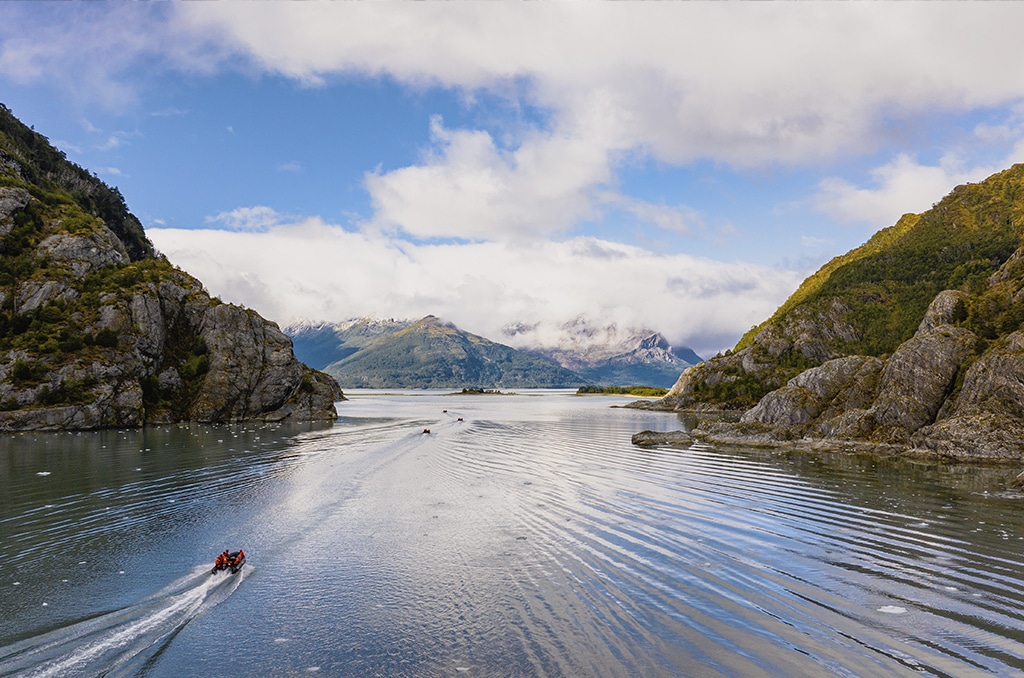
For much of the voyage, you’re sailing through channels with mountains around you. The landscape is always outside: the water, the glaciers, the changing colors, the feeling of being far from roads and towns. Even the cabins and common areas are designed with large windows so that the experience remains connected to what is happening outside.
Then there are the places you can actually reach.
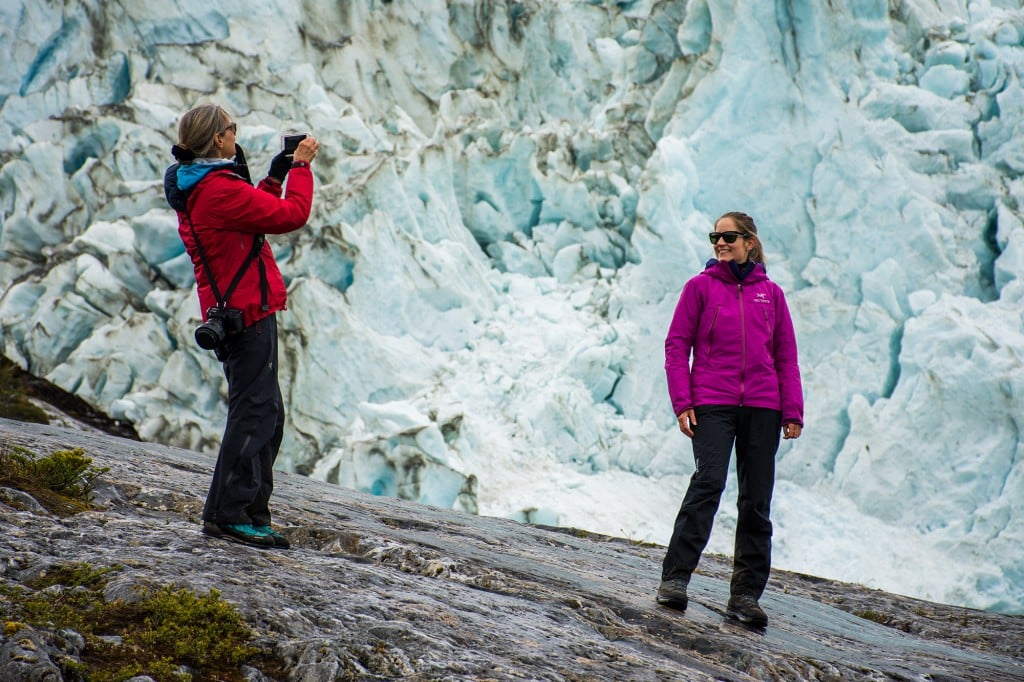
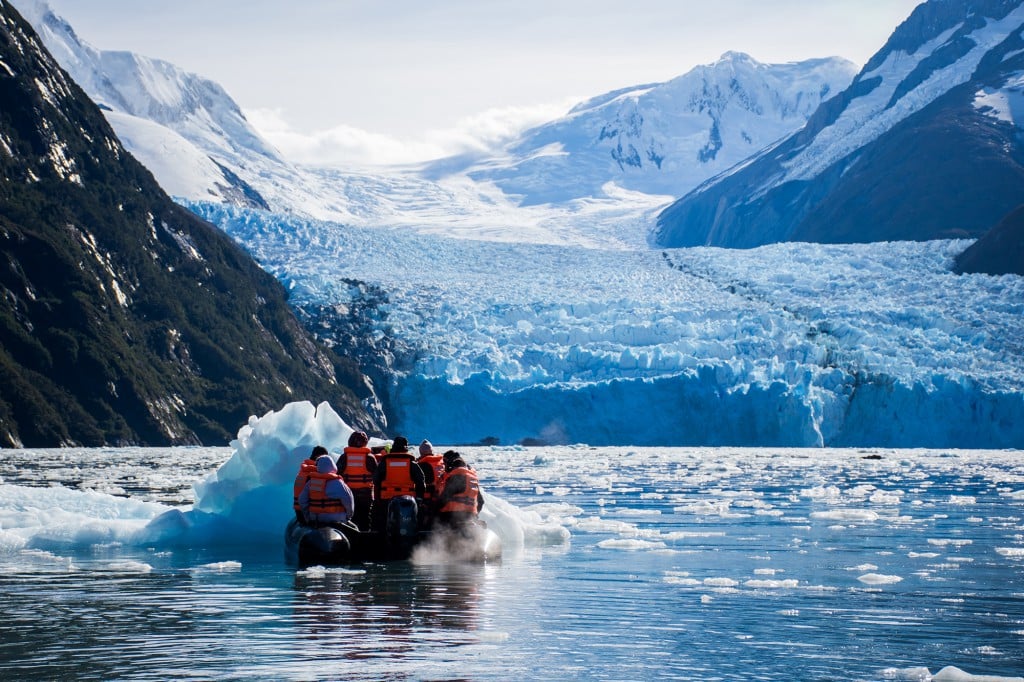
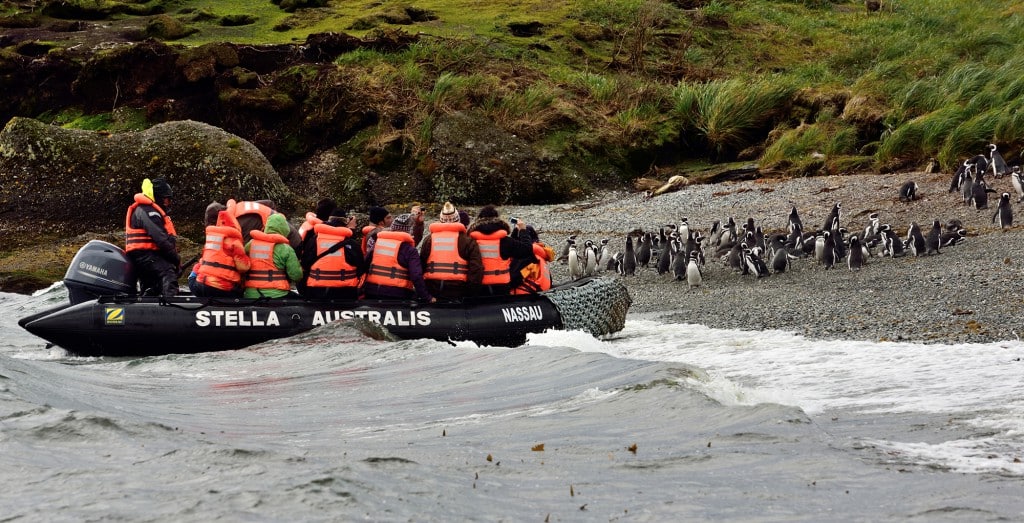
You leave the main ship by Zodiac for expeditions and landings, getting closer to glaciers and remote areas that aren’t accessible in the usual way. Depending on the route and weather conditions, Cape Horn can also become part of the journey.
There is something about that that I find very special.
We often talk about exclusivity in travel as if it were about the hotel you stay in or how much something costs.
For us, this is a different kind of exclusivity.
It’s having access to a remote part of Patagonia because the geography itself makes it difficult to reach. It’s looking outside and seeing mountains, water and glaciers rather than another road or another town. It’s experiencing Patagonia from a perspective you simply don’t get when you travel through it by land.
And perhaps that’s the best way to understand what happens when the road ends.
You don’t leave Patagonia behind. You discover another side of it.
How the Land-and-Sea Patagonia Route Actually Works
So, what does this look like when we actually put it into an itinerary?
The expedition voyage connects Punta Arenas, in Chile, with Ushuaia, in Argentina, and it can also be done in the opposite direction. The journey takes four nights and five days.
What I think is important to understand is that you’re not spending four days simply sitting on a ship while it takes you from one city to another.
The ship is your base, but the experience happens both on the water and off the ship.
During the voyage, you navigate through the channels and waterways of the far south. Each day, the expedition team explains what the conditions allow and what you’ll be exploring. Then, for the excursions, you leave the ship in smaller Zodiac boats to approach and land in different areas along the route.
This is how you can get closer to glaciers, explore remote landscapes and, depending on the itinerary and conditions, experience places such as Cape Horn.
And there’s an important word there: conditions.
This is Patagonia, and the weather is part of the experience. The expedition team decides what is possible each day based on safety and conditions, so a particular landing — including Cape Horn — can never be guaranteed.
I actually think it’s helpful to know this before you go.
This isn’t an itinerary where every hour is fixed and the landscape has to cooperate with our plans. You travel according to what Patagonia allows that day.
Then you return to the ship, where you have your cabin, meals and common spaces before continuing through the channels toward the next expedition.
So when we’re deciding whether this route makes sense within a larger Patagonia journey, I wouldn’t think of it as a traditional cruise that we’re adding between two destinations.
I would think of it more like this:
You’re using the ship to continue exploring a part of Patagonia where the road can no longer take you — while, at the same time, making your way between Chile and Argentina.
That combination is what makes the route so unusual.
Want to Hear What the Expedition Is Actually Like?
We spoke with Mara from Australis about traveling through the remote waterways between Argentina and Chile — from Zodiac landings and glaciers to life on board, changing weather conditions and what to know before deciding whether this expedition belongs in your Patagonia journey.
How the Argentina and Chile Patagonia Route Fits Into a Patagonia Journey
| Argentina | By Sea | Chile | |
|---|---|---|---|
| Where | Ushuaia / Tierra del Fuego | Beagle Channel, Cape Horn & remote waterways | Punta Arenas / Southern Patagonia |
| How You Move | Land / air | 4-night expedition voyage | Land / air |
| What the Connection Adds | Explore the southern end of Argentina | Glaciers, islands, Zodiac outings, wildlife & expedition landings | Continue into Chilean Patagonia |
| Where You Can Continue | Buenos Aires or other Argentine Patagonia regions | — | Torres del Paine / Puerto Natales |
What Four Days at Sea Actually Add to the Journey
Four nights is a meaningful amount of time in Patagonia.
You could spend those nights hiking, staying longer in Torres del Paine, adding another part of Argentine Patagonia, or simply slowing the pace of the trip.
So for me, the question isn’t whether the expedition is interesting.
It’s whether those four nights add something to the journey that you wouldn’t experience otherwise.
And this is where the route starts to make sense.
Once you leave Punta Arenas or Ushuaia, you’re moving through a part of Patagonia that feels very different from the places you’ve experienced by land.
The landscape becomes the channels, islands and glaciers of the far south. There are no roads connecting the places you’re exploring. You wake up somewhere new, go out by Zodiac, come close to a glacier or land in a remote area, and then continue navigating through the waterways.
But access is only part of what those days add.
The expedition guides are with you throughout the journey, explaining the history, wildlife, geography and glaciers of the region, and helping you understand what you’re seeing rather than simply passing through it.
I think that changes the experience.
You’re not looking at Patagonia from a ship for four days. You’re using the ship as a way to explore a part of Patagonia that would be very difficult to experience any other way.
There’s also something about the pace.
After days of moving between hotels, drives and excursions, the ship becomes your base for four nights. You unpack once. Your meals are there. You go out to explore and come back. And while the ship continues moving, you don’t have another transfer to organize the next morning.
For some journeys, that rhythm can be a very welcome change.
And there’s one more thing I wouldn’t underestimate: you’re largely disconnected while you’re there.
No constant messages. No checking what comes next. For a few days, the rhythm of the trip becomes very simple: you look outside, listen to the expedition team, go ashore when conditions allow, come back, eat, talk, rest, and keep moving south.
For the right person, that’s not four days taken away from Patagonia.
Is an Expedition Cruise Too Adventurous for Us?
The word expedition can make this journey sound more demanding than it actually is.
You’re going out in Zodiac boats. You’re landing in remote places. The weather can change quickly. And there are days when you’ll be walking on uneven terrain rather than following a perfectly maintained trail.
So yes, there is an active side to the experience.
But this isn’t a trip designed only for experienced hikers or people looking for an extreme adventure.
One of the things I find interesting about this route is the balance.
You can spend part of the day outside exploring and then return to a comfortable cabin, have a proper meal, sit somewhere warm and watch Patagonia continue past the windows.
The expedition team also plays an important role. Before each outing, they explain what you’ll be doing, what the terrain is like and what conditions to expect. Depending on the landing, there can be different ways to experience the excursion rather than everyone having to move at exactly the same pace.
You don’t need previous expedition experience.
What matters more is being comfortable getting in and out of a Zodiac with assistance, walking independently on natural and sometimes uneven terrain, and being prepared for Patagonia’s changing weather.
And I think that’s an important distinction.
Adventure and comfort aren’t opposites here.
You can still have the feeling of reaching somewhere remote, stepping ashore in a place with no road leading to it, and spending the day outside — without giving up a comfortable place to come back to at the end of it.
For us, that’s part of what makes this route particularly interesting for people who still want their trips to feel active and curious, but don’t necessarily want every day of Patagonia to be physically demanding.
And we have seen exactly that combination in our own travelers.
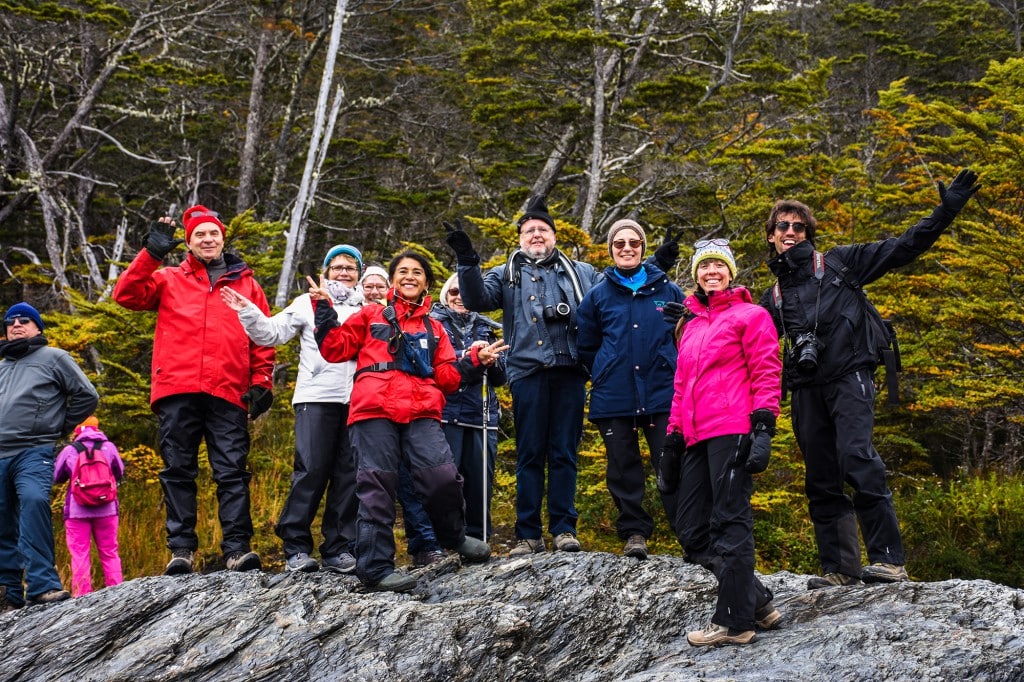
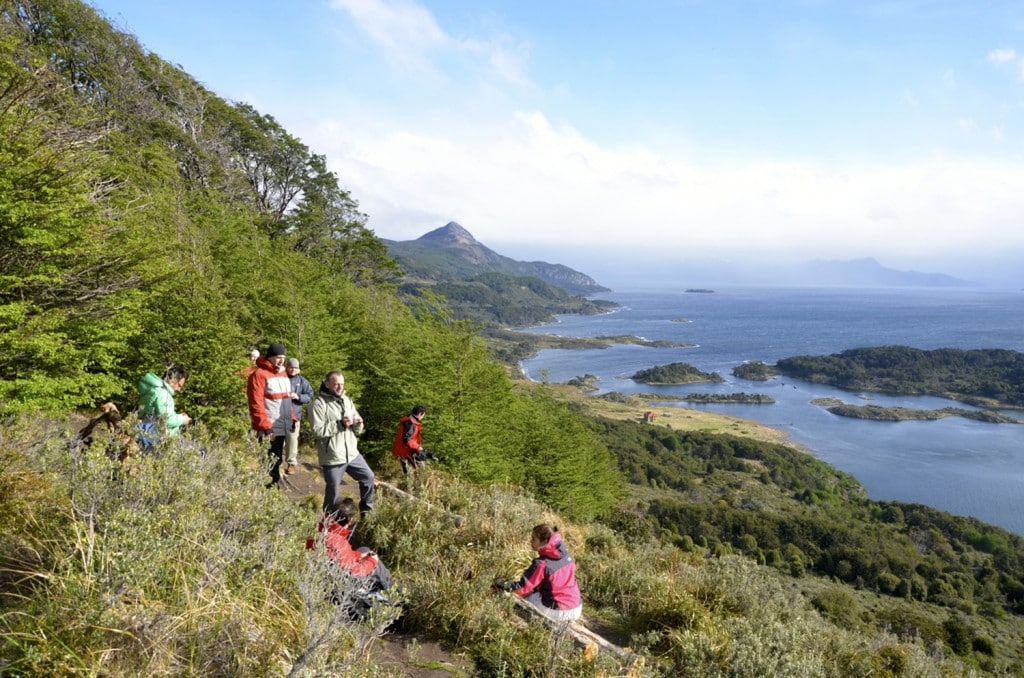
Michael & Lori: Patagonia by Land and Sea at 69 and 73
Michael and Lori were 69 and 73 when they traveled through Patagonia with us.
They’ve been traveling together for decades. Earlier in their lives, that meant more backpacking and camping. Today, they still want the adventure and the feeling of discovering somewhere new — but they also appreciate a beautiful hotel, a comfortable bed and time to recover between experiences.
That combination is one of the reasons their Patagonia journey is such a good example of how this route can work.
Their trip included Torres del Paine and Puerto Natales before continuing south aboard the Australis expedition voyage through Tierra del Fuego and on to Ushuaia.
During the expedition, they went out by Zodiac, approached glaciers and reached Cape Horn. They were fortunate with the weather and were able to go ashore there — something they knew beforehand wouldn’t necessarily be possible.
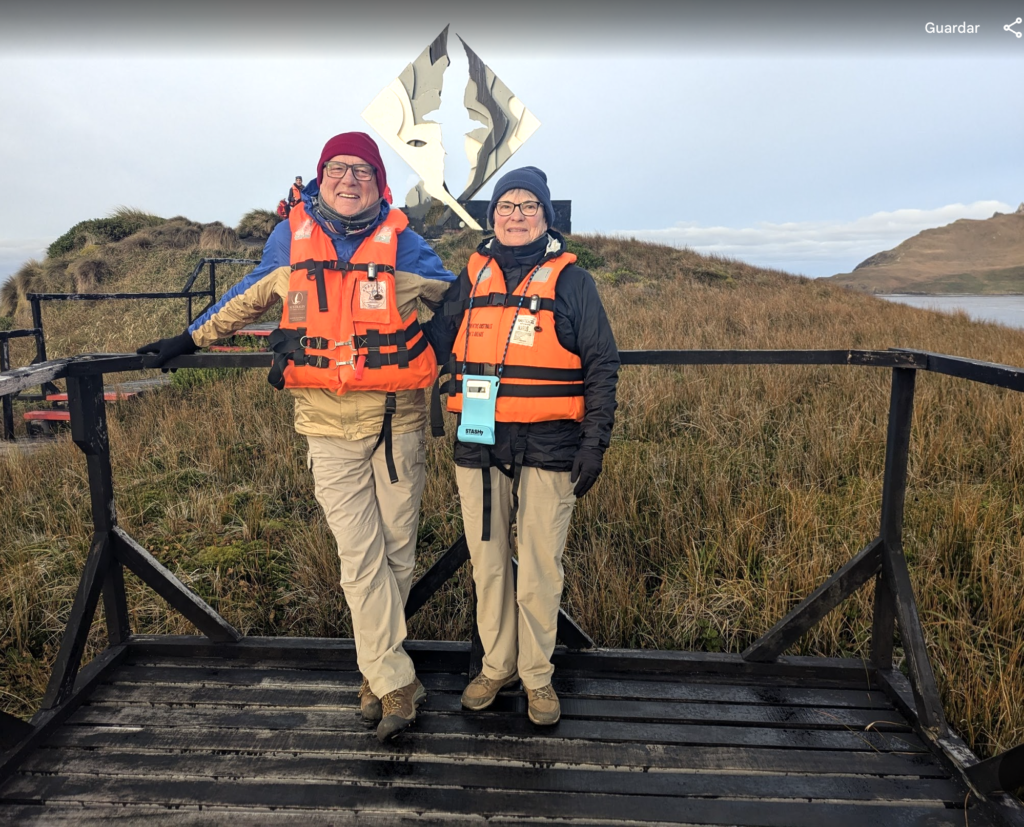
But one detail from their trip is just as important to me as the places they reached.
When they arrived in Ushuaia, they took a day to rest.
They had been exploring for weeks, and they were tired. So instead of filling that day with another excursion simply because they were in Ushuaia, they slowed down.
That’s something Maria and I think about a lot when we design longer journeys.
Being able to do an activity doesn’t necessarily mean we should keep adding activities.
Michael and Lori wanted to stay active. They wanted glaciers, wildlife, landscapes and places they hadn’t experienced before. But they also wanted the trip to feel good while they were living it.
Their journey wasn’t about proving how much they could do at 69 and 73.
It was about continuing to travel in a way that still felt like them.
And I think that’s a much more useful way to decide whether an expedition like this belongs in your own Patagonia journey.
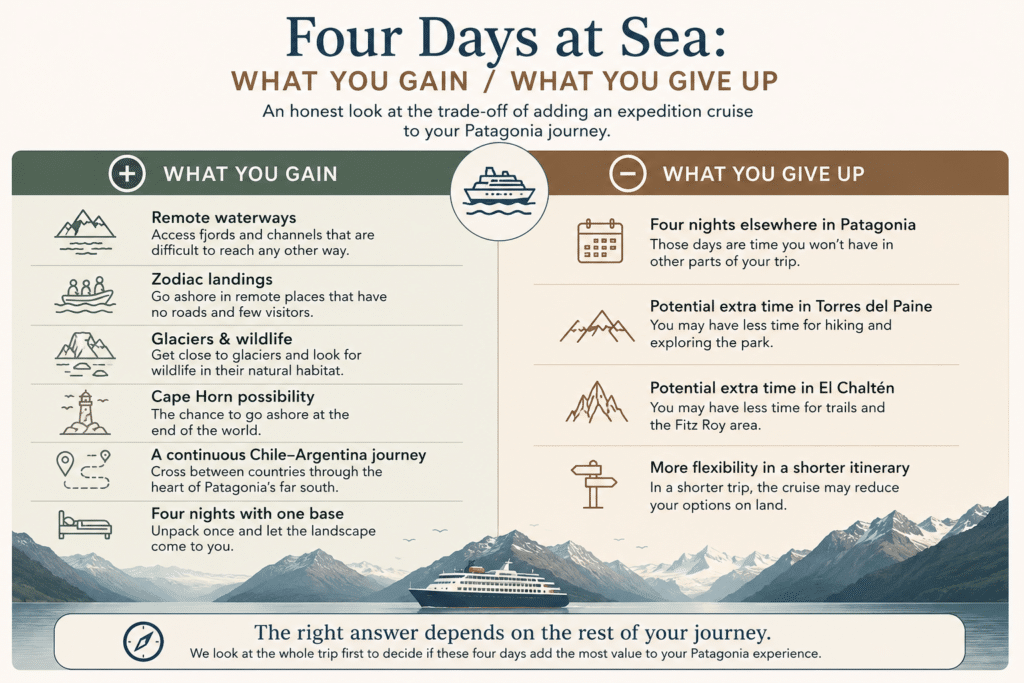
The Real Trade-Off: Is the Cruise Worth Four Days of Your Patagonia Trip?
This is the question I would ask before adding the expedition to any itinerary.
What are those four nights replacing?
Because Patagonia always involves choices.
If you have two weeks, four nights at sea might mean less time in Torres del Paine, skipping El Chaltén, or moving through the rest of the trip faster than I would like.
In that case, even if the expedition itself is wonderful, I might not recommend it.
But on a longer journey, especially one that already includes southern Chile and Ushuaia, the equation can look very different.
Instead of using a flight and another transfer simply to connect two points, those days become part of the Patagonia experience. You’re still moving toward the next destination, but you’re doing it through fjords, channels and remote landscapes that you wouldn’t otherwise see.
So when Maria and I look at this route, we don’t ask:
“Is the cruise worth four nights?”
We ask:
“Are these the best four nights we can add to this particular Patagonia journey?”
That’s a very different question.
For someone who has dreamed of spending several days hiking in El Chaltén, I wouldn’t take those days away simply to fit in the expedition.
For someone who wants more time in Torres del Paine, the answer may be the same.
But if the trip already has enough time on land — and the idea of reaching Cape Horn, exploring by Zodiac and moving through the remote waterways between Chile and Argentina feels like something genuinely different — then those four nights can add a dimension to Patagonia that the land itinerary can’t.
This is also why I wouldn’t start planning the trip by saying, “I want to take this cruise.”
I would start with the whole journey.
Where do you most want to spend your time? How active do you want the trip to be? How much moving around feels comfortable? And what experiences would you regret leaving out?
Then we can decide whether those four nights belong.
Because the goal isn’t to fit more Patagonia into the itinerary.
It’s to use your time in Patagonia well.
Who We Would Recommend This Route To — and Who We Wouldn’t
I would consider this route if Argentina and Chile Patagonia are both important parts of your journey and you have enough time to experience them without rushing everything else.
It works particularly well if you like being active but don’t need every day to be a serious hiking day. You enjoy being outside, you’re curious about wildlife and landscapes, and the idea of reaching places that aren’t part of a conventional road itinerary is part of what draws you to Patagonia in the first place.
I would also consider it if Ushuaia and Torres del Paine are already part of the trip.
In that case, the expedition isn’t something we’re adding simply because it sounds interesting. It can become the way we connect two places you already wanted to experience.
And I think it’s especially well suited to people who appreciate both sides of the equation: adventure during the day and comfort at the end of it.
But there are also trips where I wouldn’t recommend it.
If you have limited time and adding four nights at sea means rushing through Torres del Paine, cutting short El Chaltén, or moving hotels every night before and after the expedition, I would rather simplify the itinerary.
The same is true if the places you most want to experience are elsewhere in Patagonia. There’s no reason to travel all the way south simply to fit this expedition into a trip that would work better without it.
And if your idea of Patagonia is primarily long hiking days and as much time as possible on the trails, those four nights may simply be more valuable on land.
This is why we don’t start with the cruise.
We start with you, the places that matter most to you, and the amount of time you actually have.
Then we decide whether traveling between Chile and Argentina by sea makes the journey better — or simply makes it busier.
Not sure whether four nights at sea make sense for your Patagonia trip?
That’s exactly the kind of decision we help you work through when designing the journey.
Book a Discovery Call with us →What Travelers Often Underestimate Before Choosing This Route
There are a few things I would want you to understand before deciding that this route belongs in your Patagonia journey.
Not because they make the expedition less appealing, but because knowing what to expect usually makes the experience better.
The weather isn’t a detail
In Patagonia, conditions shape the day.
The expedition team plans each outing around the weather, wind and safety conditions they find along the route. That means a landing can change, be adapted or sometimes not happen at all.
Cape Horn is probably the best example.
It’s possible to go ashore there, and Michael and Lori were fortunate enough to do it. But the landing is never guaranteed.
I wouldn’t plan the expedition around one specific landing. The experience is the route as a whole, not one box you need to check along the way.
Wildlife follows its own calendar
Wildlife can be an extraordinary part of the expedition, but it shouldn’t be treated as a guarantee either.
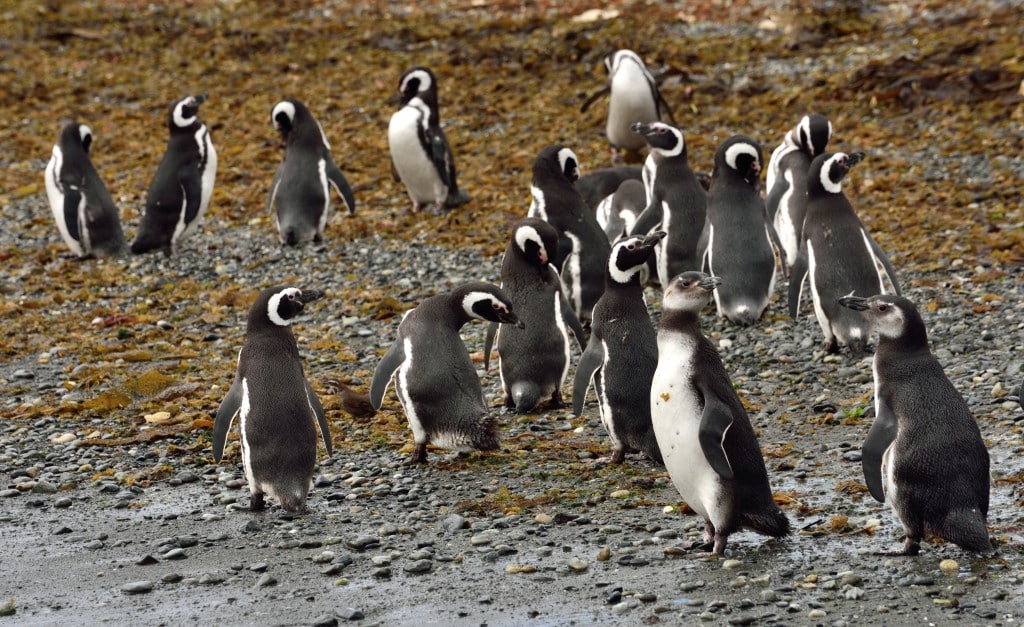
What you may see depends on the season, the route and conditions. If seeing something specific — penguins, for example — is especially important to you, that’s something we would consider when deciding when to travel, rather than assuming every departure offers the same experience.
“Expedition” doesn’t mean extreme — but it does mean active
As we mentioned earlier, you don’t need to be an experienced hiker to enjoy this journey.
But you should be comfortable moving independently, getting in and out of Zodiac boats with assistance, and walking on natural, sometimes uneven terrain.
There is a difference between not needing to be an athlete and expecting the experience to be completely passive.
Part of what makes the expedition interesting is getting off the ship and exploring.
Four nights at sea still need to fit the rest of the trip
This is the one I would come back to again.
The expedition doesn’t exist in isolation.
What happens before Punta Arenas — or after Ushuaia — matters just as much. If we’ve packed the days around the voyage too tightly, even a wonderful expedition can become part of a journey that simply feels like too much.
Sometimes the better decision is to add it.
Sometimes the better decision is to leave it out and give those days to somewhere else.
This is a journey worth planning ahead
There are relatively few cabins, and the expedition also has to work with everything around it: hotels, transfers, Torres del Paine, Ushuaia and the rest of your Patagonia itinerary.
So this isn’t one of those pieces I would leave until the end and try to fit into whatever dates are left.
The earlier we can look at the journey as a whole, the more choices we have about how to make the pieces work together.
A Patagonia Itinerary Connecting Argentina & Chile by Land and Sea
So what could all of this look like when we put the pieces together?
One of the journeys Maria and I particularly like begins at the southern end of Argentina, in Ushuaia, and then continues through Patagonia by sea before eventually returning north through Chile and back into Argentina.
And that’s what makes this itinerary interesting.
You aren’t adding an expedition cruise somewhere in the middle simply because you want to take a cruise. The voyage becomes part of the way the journey itself unfolds.
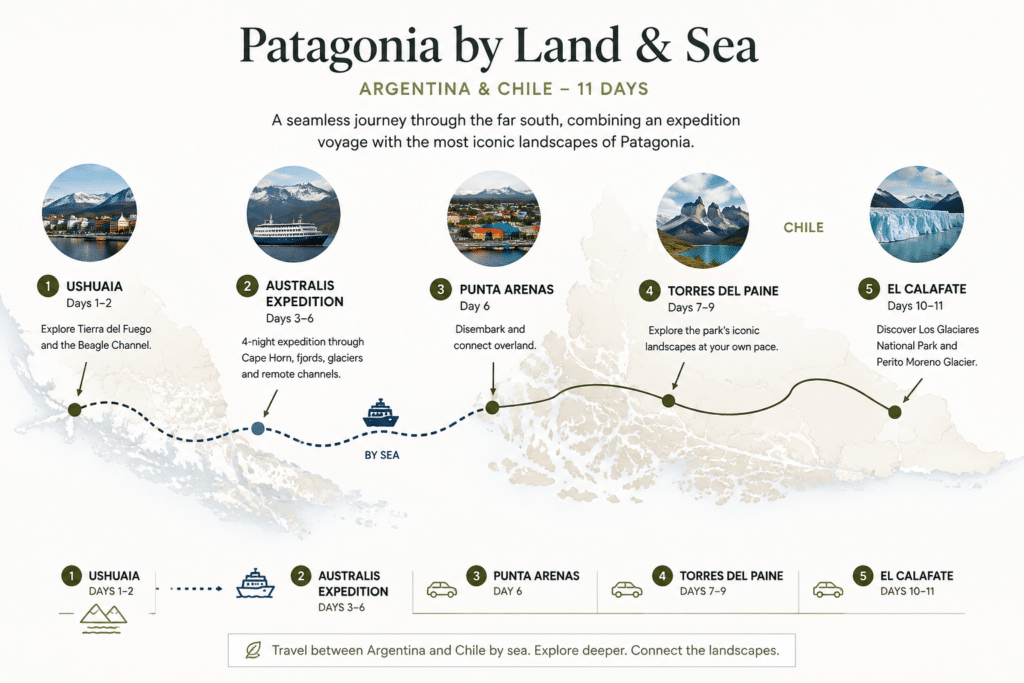
You begin with time in Ushuaia and Tierra del Fuego, exploring the landscapes around the Beagle Channel before boarding the Australis expedition voyage.
Then the road disappears from the itinerary for a while.
Over the following four nights, you continue through the waterways of the far south, with expedition outings that can include Cape Horn, Wulaia Bay, Pía Glacier and the glaciers and channels around the Darwin Mountain Range, depending on the route and conditions.
Instead of flying from one part of Patagonia to another, you’re still exploring.
The connection becomes part of Patagonia itself.
The expedition finishes in Punta Arenas, where you continue overland into Torres del Paine.
Here, the rhythm changes again.
You’re back on land, with time to explore the park according to how active you want to be — from scenic exploration and shorter walks to longer hikes.
And from Torres del Paine, you cross the border once more into Argentine Patagonia, continuing to El Calafate and Los Glaciares National Park for another completely different side of the region: the Patagonian steppe, the great ice fields and glaciers such as Perito Moreno.
So when you look at the journey as a whole, the route becomes:
Ushuaia → Tierra del Fuego → Patagonia by sea → Punta Arenas → Torres del Paine → El Calafate
Two countries. Different landscapes. Different ways of exploring.
But rather than feeling like a collection of separate destinations, each part leads naturally into the next.
And that’s really the point of this itinerary.
It’s not about fitting Argentina, Chile and an expedition cruise into eleven days.
It’s about designing those eleven days so that the way you move through Patagonia becomes part of what you came all this way to experience
See How We Connect Argentina & Chile by Land & Sea
Explore our 11-day Patagonia journey through Ushuaia, the remote waterways of the far south, Torres del Paine and El Calafate.
Explore the Patagonia Itinerary →So, What’s the Best Way to Combine Argentine & Chilean Patagonia?
So, after all of this, what would I actually recommend?
If you want to experience both sides of Patagonia, I wouldn’t begin by asking whether you should drive, fly or take an expedition cruise.
I would begin with a different question:
Which parts of Patagonia matter most to you?
Maybe it’s Torres del Paine and the glaciers around El Calafate.
Maybe Ushuaia has always been part of the dream.
Maybe you want several serious hiking days. Or perhaps you want the landscapes and sense of adventure, but with a little more balance between active days and time to slow down.
Once we understand that, the connections become much easier to evaluate.
For some journeys, flying is the right answer. It protects time for the places you care about most.
For others, traveling overland makes the geography part of the experience.
And when Ushuaia and southern Chile already belong in the itinerary — and you have enough time to give the rest of Patagonia the attention it deserves — continuing between Argentina and Chile by sea can be an extraordinary way to connect them.
Not because it’s automatically better than flying.
But because the days that might otherwise be about getting from one place to another become days of exploration themselves: navigating remote channels, going ashore by Zodiac, seeing glaciers from the water and reaching a part of Patagonia that isn’t accessible by road.
That’s the way Maria and I think about this when we’re designing a journey.
The best connection isn’t necessarily the fastest one. It’s the one that makes the whole trip work better.
Sometimes that means adding the expedition.
Sometimes it means leaving it out.
And I think being equally comfortable recommending either option is what allows us to design a Patagonia journey around the person taking it — rather than around a route we want to sell.

Still figuring out how Argentina and Chile should fit into your Patagonia journey?
Tell us what matters most to you, and we’ll help you think through the route, pace and trade-offs.
Start Planning Your Journey →Frequently Asked Questions
Frequently Asked Questions
How many days do you need for Argentine and Chilean Patagonia?
If you want to experience both countries without making the journey feel rushed, I would generally think in terms of at least two weeks, and longer if you want to include several regions.
The right number of days depends on what matters most to you. Torres del Paine, El Calafate, El Chaltén and Ushuaia can each justify several days, so the challenge isn’t finding enough places to visit — it’s deciding which ones deserve your time.
What is the best way to travel between Chilean and Argentine Patagonia?
There isn’t one best option for every itinerary. Depending on the places you’re combining, you can travel between Chile and Argentina by road, air or sea.
Maria and I look at the complete journey first and then decide which connection makes the most sense for the time you have and the places you want to experience.
How do you travel between Torres del Paine and Ushuaia?
You can connect Torres del Paine and Ushuaia using a combination of overland transportation and flights, or incorporate an expedition voyage between Punta Arenas and Ushuaia.
The expedition option takes longer, but those days become part of the Patagonia experience rather than simply transportation between destinations
How long is the Australis expedition cruise?
The expedition between Ushuaia and Punta Arenas — or in the reverse direction — is typically four nights and five days.
The voyage includes navigation through the channels of the far south as well as Zodiac outings and expedition landings, depending on the route and weather conditions
Is an expedition cruise in Patagonia worth it?
It can be, but I wouldn’t decide based on the cruise alone.
The real question is what those four nights are replacing in the rest of your Patagonia itinerary.
If adding the expedition means rushing Torres del Paine or giving up somewhere that’s more important to you, I may not recommend it. If you have enough time and both Ushuaia and southern Chile already make sense in the journey, those four nights can add an experience you wouldn’t have by simply flying between destinations.
Do you need to be very fit for a Patagonia expedition cruise?
You don’t need to be an experienced hiker or an extreme adventurer.
You should, however, be comfortable walking independently on natural and sometimes uneven terrain and getting in and out of Zodiac boats with assistance.
The experience is active, but the ship also gives you a comfortable base to return to after the excursions.
How to Connect Argentina & Chilean Patagonia by Land & Sea
MEET US
Blog