Blog
MEET US
Luxury Patagonia Tours — A Boutique Travel Design Approach
A closer look at how private Patagonia journeys are thoughtfully designed — from seasonality and routing to lodge selection and travel rhythm.
If you’re researching luxury Patagonia tours, you’re probably expecting to find a list of itineraries.
Ten-day routes.
Fourteen-day packages.
A selection of lodges paired with famous highlights.
This isn’t a list. It’s a different approach.
After almost 20 years designing private journeys across South America, I’ve learned that Patagonia isn’t a destination you choose from a menu.
It’s a region that needs to be thoughtfully designed.
Most luxury Patagonia tours online focus on what you’ll see — glaciers, peaks, national parks.
But what truly shapes the experience isn’t the scenery. It’s the structure behind it.
The order of regions.
The rhythm of your days.
Where you stay.
How often you move.
When you travel.
Small decisions quietly determine whether Patagonia feels expansive — or exhausting.
When I use the phrase “luxury Patagonia tours,” I’m not talking about excess or oversized resorts.
I’m talking about boutique travel design:
Private journeys built around you.
Curated days shaped to your natural pace.
Thoughtful routing in a region where distances are long and logistics matter.
And access to the right people — guides, lodge teams, estancia hosts — who transform landscapes into something deeply personal.
This guide won’t give you a menu of tours.
It will give you the framework behind them — so you can understand how a Patagonia journey is actually shaped, and why thoughtful design makes all the difference.
Because here, luxury isn’t about excess. It’s about intention.
Patagonia Journeys at a Glance
- Best regions: Torres del Paine (Chile), El Chaltén and El Calafate (Argentina)
- Ideal trip length: 9–12 days for a balanced Patagonia journey
- Best season to visit: October through April, depending on travel style and desired privacy
- Typical structure: lodge-based exploration with private guiding and scenic navigation
- Often combined with: Mendoza wine region and Atacama desert for contrast
What Actually Defines a Luxury Patagonia Tour — And Why Design Comes First
After years of designing Patagonia journeys, I’ve noticed something consistent.
The difference between an extraordinary experience and an exhausting one rarely comes down to the destination itself.
It comes down to how the journey is structured.
Before choosing a lodge.
Before confirming flights.
Before deciding how many days to spend in each region.
There’s a deeper question to answer first.
What actually defines a true luxury Patagonia tour?
Quick answer: The best luxury Patagonia tours are not defined by hotels or activities, but by how the journey is designed. The most successful Patagonia itineraries combine the right season, thoughtful routing between Argentina and Chile, lodge-based exploration, and a pace that allows the landscape to unfold naturally.
If you’d like to see how this approach translates into real journeys, take a look at a few examples of how we design private Patagonia trips across the region.
→
Explore Our Patagonia Journeys
In Patagonia, luxury is often misunderstood.
It’s easy to assume it means five-star lodges, private transfers, or upgraded rooms with glacier views. Those elements matter — but they are not what truly define the experience.
A true luxury Patagonia tour is defined by intention.
It begins with pacing.
Patagonia is vast, and distances can quietly exhaust even the most seasoned traveler. A refined journey respects rhythm — allowing time to absorb the landscape rather than rushing through it.
It continues with base selection.
Where you stay determines how your days unfold. A lodge inside Torres del Paine offers immersion and ease. A hotel outside the park changes the flow entirely. In Patagonia, geography shapes experience.
Then there is routing.
Combining Chile and Argentina can be extraordinary — or unnecessarily complicated. The order in which regions are visited influences energy levels, weather exposure, and travel time.
But beyond logistics, what truly elevates a Patagonia journey is the people.
The private guide who understands when to walk in silence.
The estancia host who shares stories over slow-cooked Patagonian lamb.
The captain who adjusts a glacier navigation to avoid the crowds.
Luxury here is human. It’s relational. It’s about access to individuals who live the landscape, not just operate within it.
And finally, it’s about space.
Space to breathe.
Space to reflect.
Space to experience Patagonia without feeling scheduled.
A true luxury Patagonia tour is not defined by excess — it’s defined by thoughtful design, seamless movement, and meaningful connection.
That is what transforms Patagonia from a destination into a deeply personal journey.
Argentina or Chile — Or Both? Designing the Right Structure for Your Journey
Patagonia spans two countries, Argentina and Chile — and they are not interchangeable. Understanding the differences early shapes the entire design.
Landscape Differences
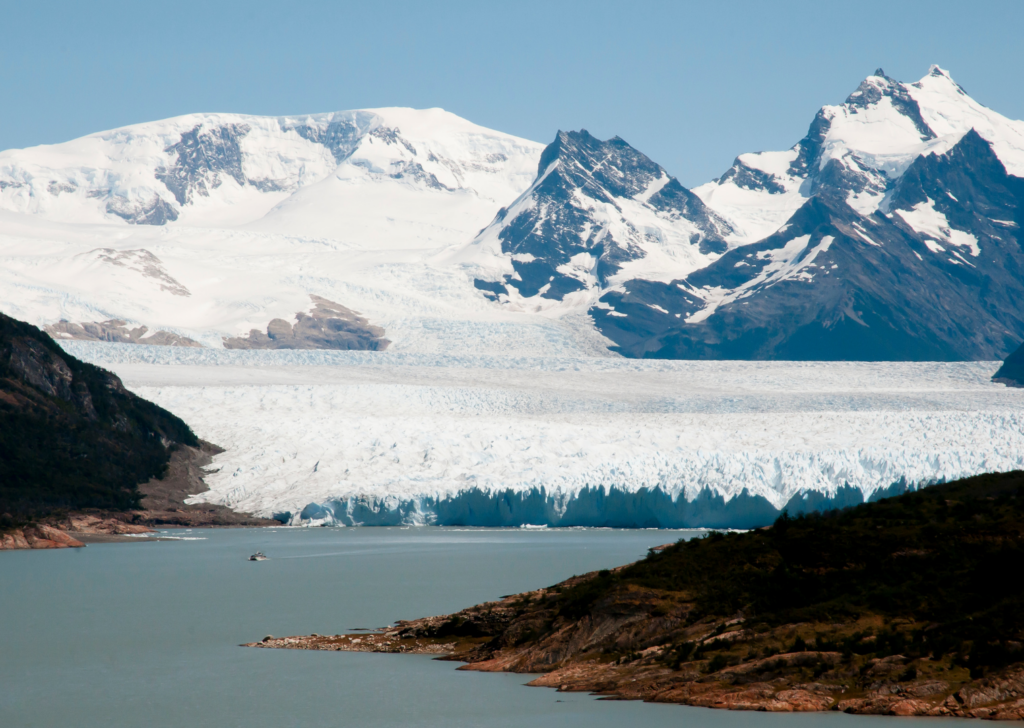
Argentine Patagonia is expansive and horizontal. El Chaltén and El Calafate offer dramatic glacier views and accessible hikes with wide skies and open terrain.
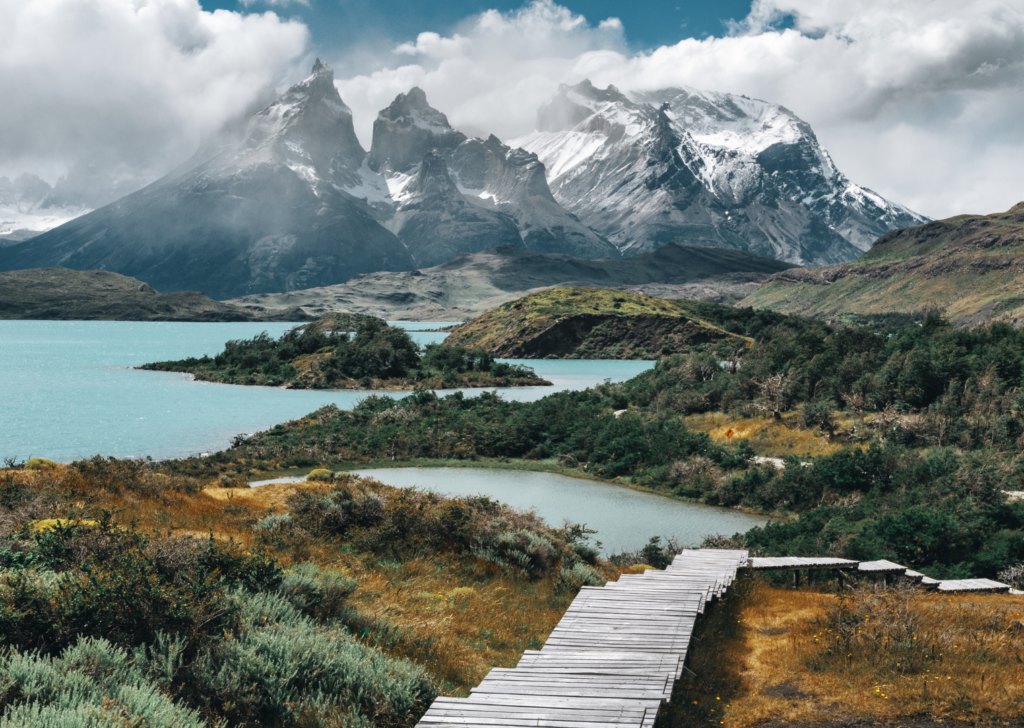
Chilean Patagonia — particularly Torres del Paine — feels more vertical and immersive. Peaks rise sharply. Lodges sit within protected parks. The experience often feels more contained and curated.
Both are extraordinary in their own way.
They simply reveal different sides of Patagonia..
Routing Logic
Combining Argentina and Chile can be extraordinary — but only if structured properly. The order matters.
Wind patterns, driving distances, flight connections, and border timing all influence energy levels.
Poor sequencing creates fatigue. Thoughtful routing creates flow.
For a deeper look at how days are typically structured, see:
If you’re planning your route through Argentine Patagonia, this guide explores two of the region’s most iconic destinations — El Calafate and El Chaltén — with the experiences, landscapes, and moments that shape a well-designed Patagonia itinerary.
Border Crossings
Border crossings are simple — but not invisible.
They require timing, documentation, and buffer planning. In peak season, even small inefficiencies can create unnecessary stress. This is why transitions are often the least visible — yet most important — part of Patagonia design.
When Combining Argentina and Chile Makes Sense
Combining both sides of Patagonia can create a beautifully balanced journey — but it works best when the timing is right.
In general, it makes sense to explore both Argentina and Chile when:
- You have at least 9–12 days to travel without rushing
- You want the contrast of glacier landscapes in Argentina and the dramatic peaks of Torres del Paine in Chile
- You prefer diversity over depth in a single region
When designed thoughtfully, the combination can add depth and perspective to the trip — allowing you to experience two distinct expressions of Patagonia in a single journey.
Seasonality also plays a role in this decision. For a detailed breakdown of weather patterns, travel timing, and what each month in Patagonia actually feels like on the ground, see:
→ Best Time to Visit Patagonia
Choosing the Right Lodges — Designing the Rhythm and Flow of Your Journey
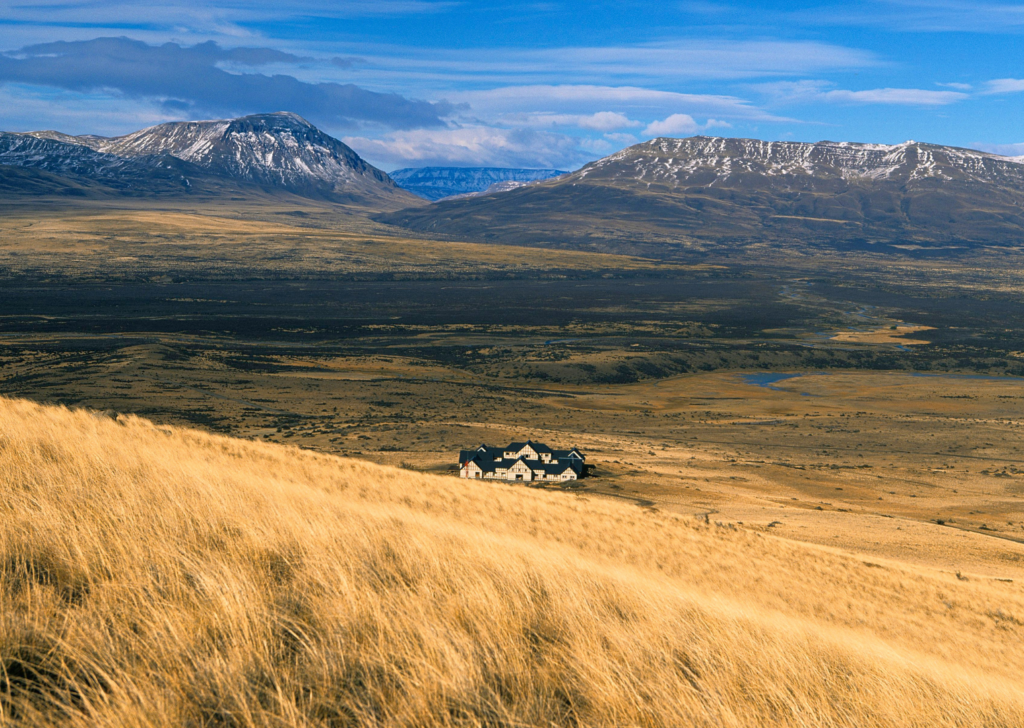
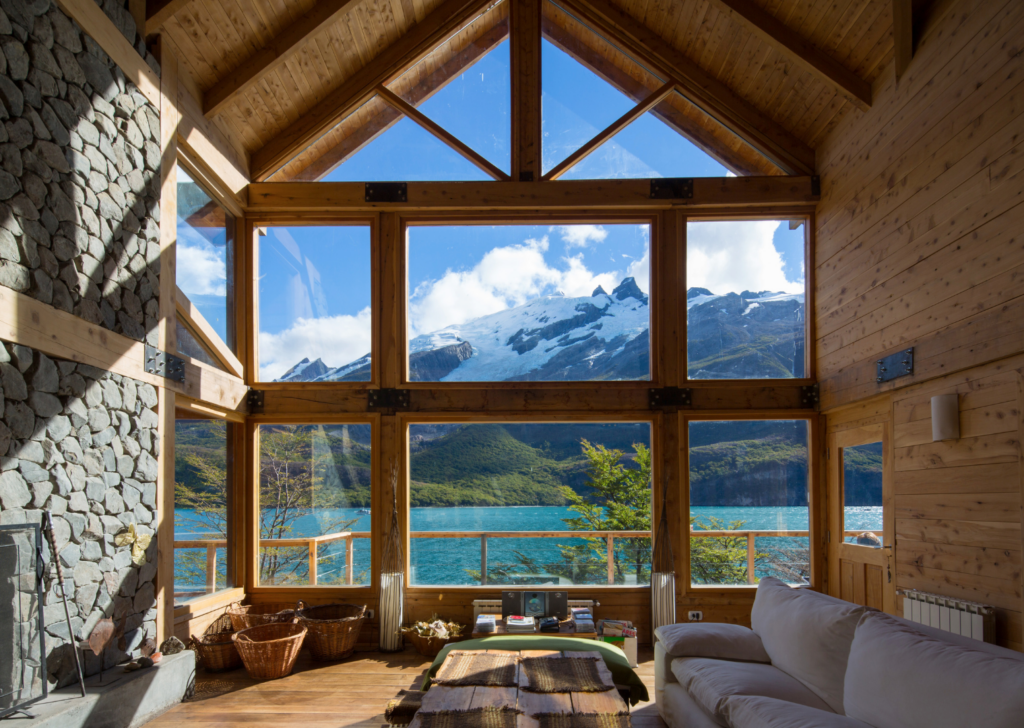
In Patagonia, hotels are not just places to sleep.
They define the journey.
Where you stay determines how your mornings begin, how far you travel each day, how immersed you feel in the landscape.
Lodging here is strategy.
The all-inclusive lodge model — but not in the way you think
When I talk about all-inclusive in Patagonia, I don’t mean a large resort with buffet lines.
I mean small, architecturally distinctive properties built to blend into the landscape.
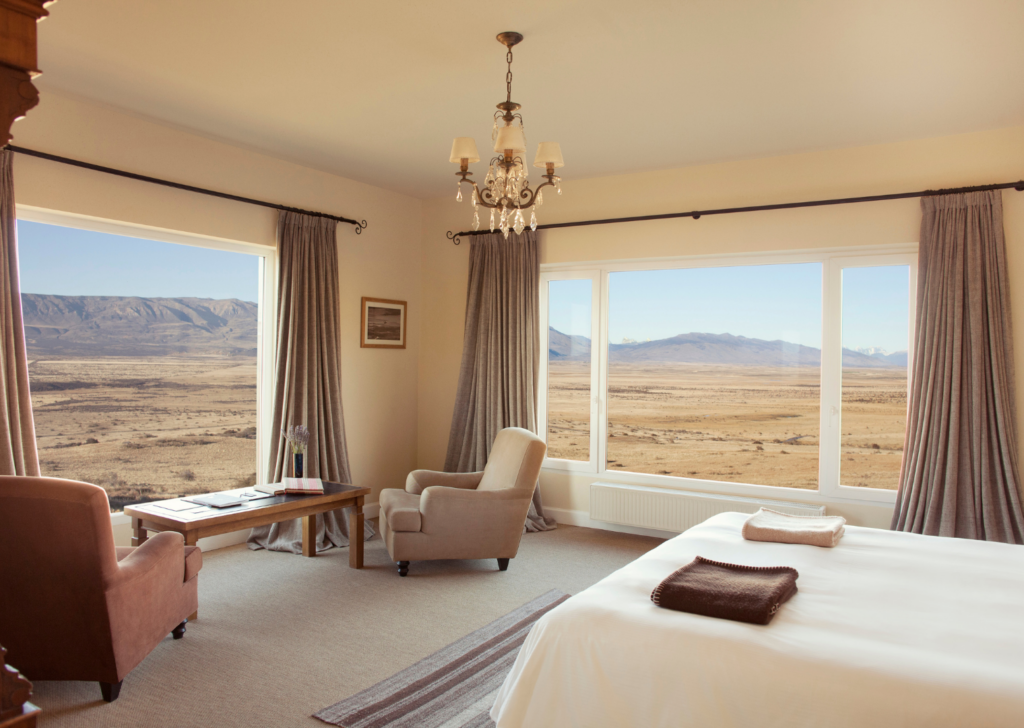
You wake up to uninterrupted views of mountains or lakes. Interiors are designed with local materials. Furniture is handcrafted. The space feels rooted in place.
During the day, you choose from a curated menu of explorations — adapted to weather, your energy, and your pace — guided by people who genuinely know the terrain.
There’s no packing every morning.
No juggling logistics.
Meals highlight regional ingredients. Evenings are quiet. Sometimes there’s a spa. Often there’s just the wind and the silence.
Many of these lodges are deeply committed to conservation and collaboration with local communities — something that truly matters in Patagonia.
Everything is included — not to create excess, but to create ease.
You arrive.
You settle in.
And Patagonia begins.
Boutique Charming Hotels
In other regions — like El Calafate or El Chaltén — boutique hotels offer a different rhythm.
They’re smaller. More intimate. Often design-forward.
They work beautifully when paired with private guiding, giving you flexibility without structured programming.
Estancia Stays
Estancias add cultural depth. They introduce gaucho traditions, private land access, and slow evenings around open-fire cooking. Patagonia becomes human here. Not just scenic.
For a deeper look at properties across regions: → Luxury Patagonia Hotels
And to see how these pieces come together in a fully designed private journey: → Explore Our Luxury Patagonia Journey
Fjord and Expedition Navigation
In the southern fjords, expedition-style navigation introduces another layer. Your base moves with you. Remote landscapes become accessible. The perspective shifts. But it needs to be integrated carefully into the routing. Too many transitions fragment the journey. Too few reduce contrast.
In many cases, Patagonia works best when you don’t stay in just one type of place. Combining two or three styles — a lodge, a boutique hotel, maybe an estancia — adds texture and perspective to the journey.
Many travelers realize at this point that designing Patagonia well is less about choosing hotels and more about sequencing the journey correctly. If you’d like help thinking through seasonality, routing, and lodge rhythm, schedule a Patagonia planning session with Clara and Maria .
Seasonality — Designing Your Journey Around the Right Season
Patagonia isn’t “one season fits all.” And honestly, this is where most trips start to go slightly sideways — not because people choose the “wrong” month, but because they choose a month without knowing what it actually feels like on the ground.
Patagonia’s seasons can shift quickly, and understanding the rhythm of the region Before choosing your travel dates, it makes a real difference.

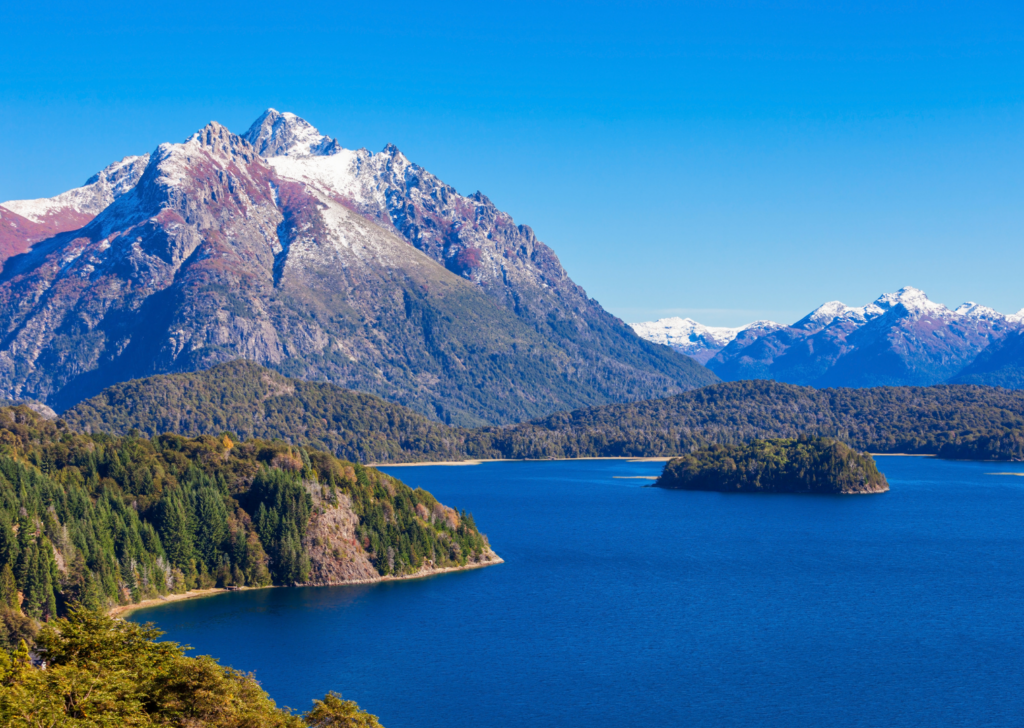
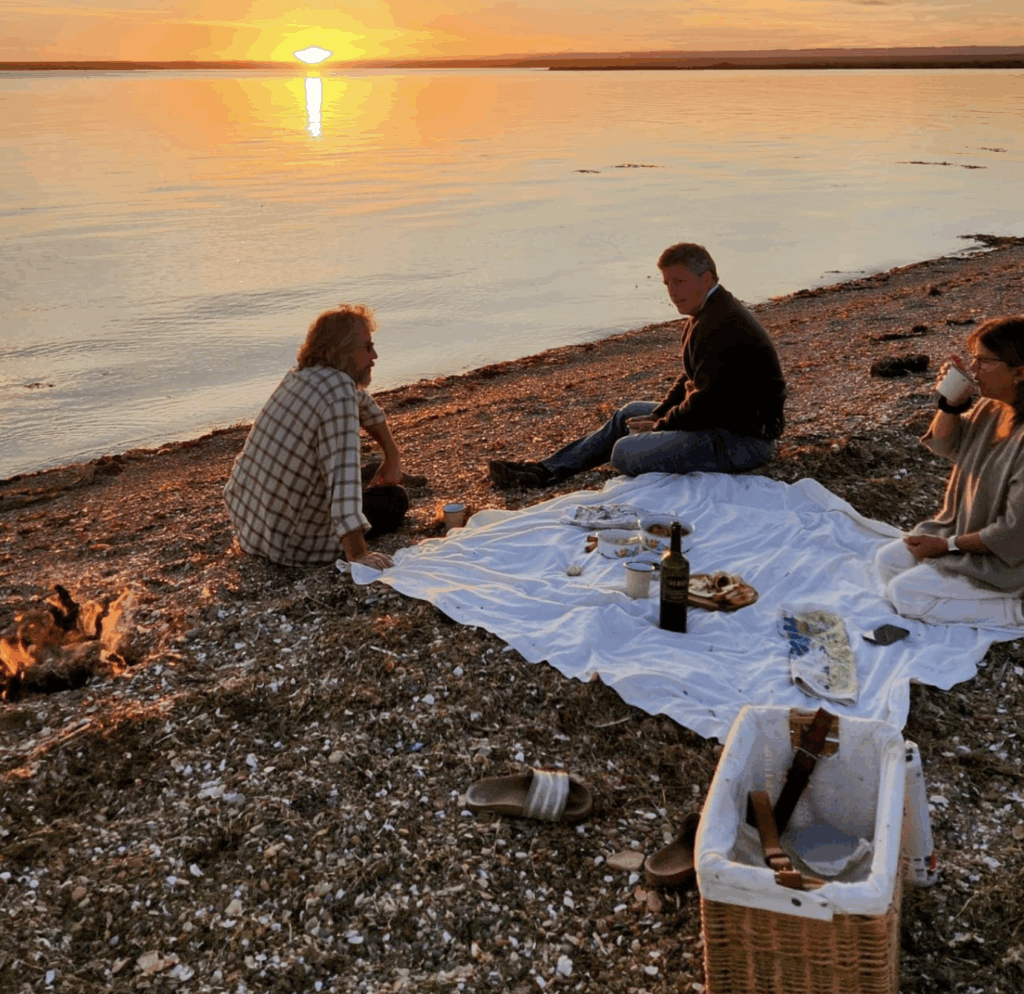
Here’s the simple way I think about it:
Summer (Dec–Feb) is the easiest for first-timers: long daylight, smoother logistics, most places open.
Shoulder seasons (Oct–Nov / Mar–Apr) can feel more special: fewer people, softer pace, and often a more intimate experience overall.
Winter (May–Sep) can be stunning, but it’s not the same Patagonia. Some regions slow down, some properties close, and the trip becomes more niche — it can be magical if that’s what you want, but it needs a different design.
And one more thing that matters a lot for “luxury Patagonia tours”: Privacy.
If your dream is Patagonia with space, calm, and no sense of crowds, shoulder season often delivers that feeling better than peak summer.
You can find more about Seasons in Patagonia Here:
Activity Level — Designing the Right Pace for Your Patagonia Journey
This is one of my favorite parts of planning Patagonia — because there’s a huge myth that you need to “trek” to really experience it.
You don’t.
Patagonia works beautifully when it’s designed around your natural pace, not someone else’s idea of what counts as “adventure.” Here’s how I usually frame it with travelers:
If you love big hikes, we design days that build energy (and include recovery time, because Patagonia is not the place to overschedule).
If you prefer scenic exploration, we choose regions with incredible viewpoints, short walks, and experiences that still feel immersive.
If you want soft adventure, Patagonia is perfect: horseback riding, boat navigation, gentle hikes, wildlife, lakes, estancias, even culinary moments — without pushing your body too hard.
You can read more about hiking in Patagonia here:
Also: how you move matters.
A private journey often feels “luxury” simply because you’re not figuring out logistics on the go. Private transfers, the right flight routing, and realistic drive times can change the whole experience.

Planning a Patagonia journey?
Before confirming flights or choosing lodges, access our South America Travel Guide. It offers the broader context most travelers wish they had earlier — seasonality, destination flow, and the small decisions that shape a well-designed journey.
If Patagonia is on your mind, this guide helps you step back first — so the choices you make next (timing, pace, and where to base yourself) feel thoughtful and clear.
Planning Patagonia?
Get our South America Travel Guide — a quick overview of the seasons, regions, and planning decisions that shape a well-designed Patagonia journey.
Itinerary Length — Designing Flow, Balance, and Breathing Room
Patagonia looks like a “region,” but it behaves more like several different worlds that happen to share a name.
So when people ask me, “How many days do I need?” my honest answer is:
It depends on how you want it to feel.
Here’s a simple guide I use:
- 7–8 days → best for one region done properly (no rushing, no checklist energy)
- 10–12 days → ideal for a richer rhythm: two regions, with breathing room
- 14+ days → when you can include something extra (a cruise, deeper lodge-based stays, or combining Chile + Argentina without fatigue)
Finding the right length for a Patagonia journey often becomes clearer once the routing and lodge style are defined. If you’d like to think this through before booking anything, you’re welcome to schedule a short planning session with us, Clara and Maria .
And yes — it can be beautiful to combine Patagonia with another region if it matches your intention, not just because it “fits.” Some travelers love pairing Patagonia with Mendoza for a very different energy (food + wine + rest), or with Atacama for contrast.
Patagonia reveals itself differently depending on the rhythm of the journey — the lodges you choose, the landscapes you connect, and the pace that allows the region to unfold naturally.
If you’d like to see how these decisions translate into real journeys, we’ve gathered a few examples of how we design Patagonia trips across Chile and Argentina.
If you’re planning your route through Argentine Patagonia, this guide explores two of the region’s most iconic destinations — El Calafate and El Chaltén — with the experiences, landscapes, and moments that shape a well-designed Patagonia itinerary.
Common Mistakes When Planning Luxury Patagonia Tours
I’ll say this gently: Patagonia doesn’t forgive rushed planning.
Not because it’s dangerous or complicated — but because when the rhythm is wrong, you feel it immediately.
The most common mistakes we see:
- Overpacking destinations (trying to “do it all” in one trip)
- Underestimating distances (Patagonia drive times are not “Google Maps cute”)
- Poor lodge sequencing (switching styles too often, or choosing bases that create unnecessary transfers)
- Wrong seasonal expectations (expecting summer weather in shoulder season, or planning winter without knowing what closes)
A luxury Patagonia tour isn’t “more expensive Patagonia.”
It’s Patagonia designed so it feels effortless when you’re actually there.
Is a Luxury Patagonia Journey Right for You?
I don’t think luxury Patagonia tours are “for a type of person.”
They’re for a type of traveler — someone who values flow, comfort, and meaningful experiences more than ticking boxes.
Here’s who it tends to fit best:
- Retirees / empty nesters who want comfort, great guiding, and days that feel spacious
- Couples who want romance without the logistical stress
- Families with adult children who want shared experiences — but also flexibility for different energy levels
- New Year’s travelers who want Patagonia to feel grounding, not chaotic (and who need to plan early
How We Design Private Patagonia Journeys
Patagonia is not difficult to visit — but it is surprisingly easy to design poorly.
After years of designing journeys across southern Chile and Argentina, we’ve learned that the difference rarely comes from adding more destinations. It comes from creating the right rhythm between them.
When we design a private Patagonia journey, we’re not starting with “where do you want to go?”
We start with something simpler:
How do you want it to feel?
From there, we build:
- Custom routing that respects the realities of Patagonia (distance, flights, transitions)
- A local team on the ground who can actually make things smoother when anything shifts
- A realistic pace (so your days feel full, but never exhausting)
- The details that matter: lodge selection, guides, timing, and those small moments that make the trip feel personal
If you’re considering Patagonia within the next 6–18 months, the next step is a 30-minute Strategy Session. It’s a calm, practical conversation — and it saves you from designing the trip backwards.
We would love to help you plan this once-in-a-lifetime trip to Patagonia.
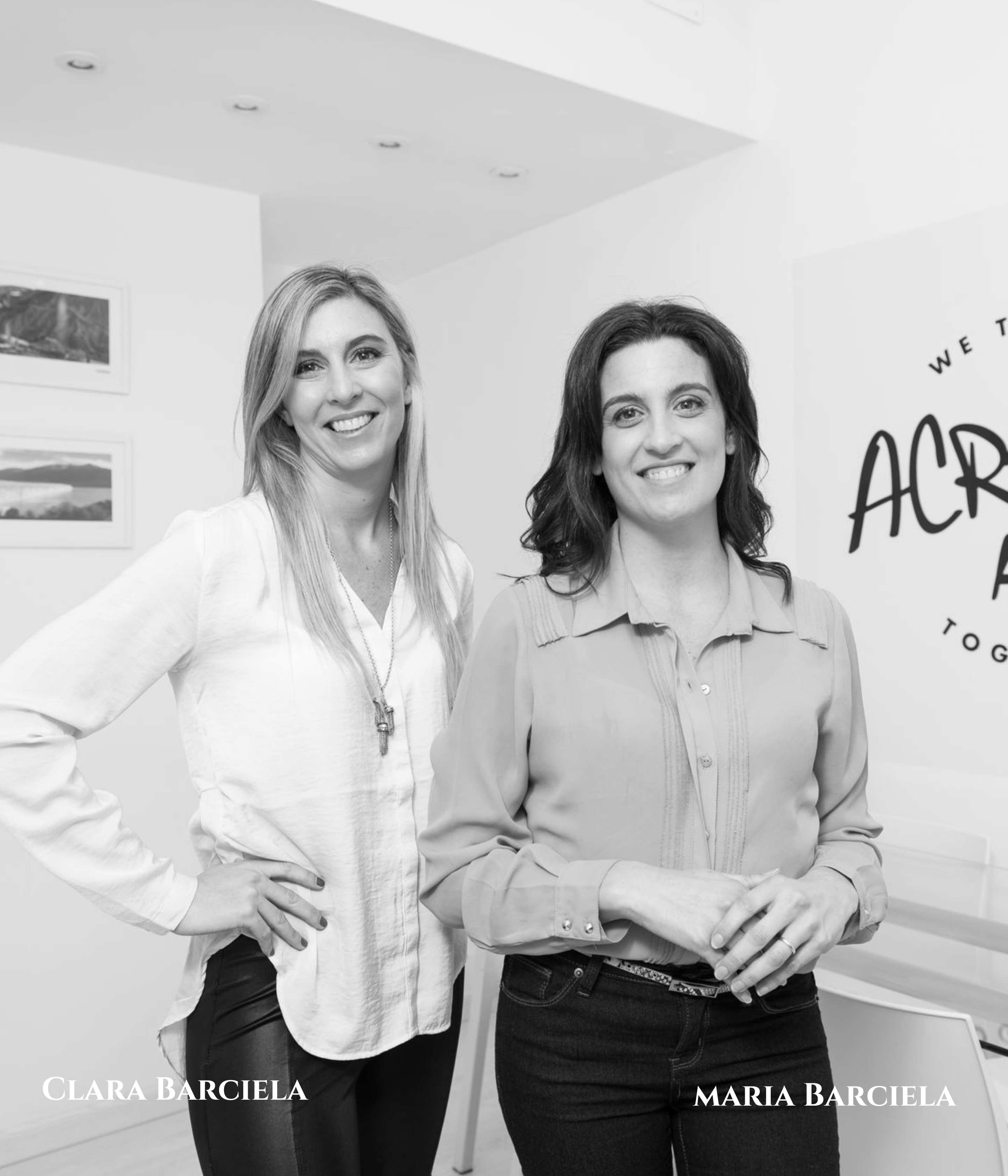
Planning Patagonia isn’t hard — but it’s very easy to design poorly. The details that look “small” on a map (routing, lodge bases, pacing, transitions) are exactly what decide whether the trip feels effortless… or exhausting.
We are Clara and Maria, founders of Across South America. For nearly two decades, we’ve designed private Patagonia journeys for travelers who care about how the experience feels — not just what it includes.
If Patagonia is on your mind, a Strategy Session with us is the calm first step: we’ll map the right season, the best routing, and the lodge rhythm that matches your travel style.
Patagonia is easy to dream about — and easy to design wrong. A Strategy Session helps you choose the right season, routing, and lodge rhythm for how you like to travel.
Clara & Maria — founders of Across South America.
Frequently Asked Questions About Patagonia Travel
How many days do you need for a Patagonia journey?
Most well-designed Patagonia journeys last between 9 and 12 days, allowing time to experience both Chilean Patagonia and Argentine Patagonia without rushing.
Is Patagonia better in Chile or Argentina?
Both sides offer extraordinary landscapes. Chile’s Torres del Paine is known for immersive lodge-based experiences, while Argentine Patagonia offers iconic glacier views and accessible hiking.
When is the best time to visit Patagonia?
The most popular season runs from October through April, though shoulder seasons often provide more privacy and a slower travel rhythm.
Is Patagonia worth it for luxury travel?
Absolutely. Patagonia is one of the most rewarding regions in South America for travelers seeking privacy, meaningful landscapes, boutique lodges, and thoughtfully paced private journeys.
Can you combine Chilean and Argentine Patagonia in one trip?
Yes — and in many cases, combining both sides creates the most complete Patagonia experience. The key is designing the route carefully so the journey feels seamless rather than rushed.

Clara Barciela
Hi, I’m Clara. I wrote this to help you plan your trip more authentically, with more clarity and less overwhelm.